Two Late Works by Niccolò Castiglioni: Twelve-Tone Materials and Musical Poetics in «Sette» and «Schönberg demeure»
Keywords:
Niccolò Castiglioni, Arnold Schönberg, Twelve-tone technique, Sketch studies, Musical poeticsAbstract
This article examines two late compositions by Niccolò Castiglioni, «Sette» (1995) and the unpublished «Schönberg demeure» (1995), through the study of autograph manuscripts, sketches, and preparatory materials preserved in the Castiglioni Collection at the Fondazione Giorgio Cini. Focusing on the composer’s self-defined ‘Schönbergian’ strand, the article reconstructs his compositional methods and investigates the role of twelve-tone techniques within his late musical language. The analysis demonstrates that ‘pre-compositional’ serial materials function not as prescriptive structures but as flexible resources, freely combined with tonal gestures, timbral experimentation, and expressive priorities. Particular attention is devoted to the interaction between speculative procedures and poetic intentions, revealing how Castiglioni balanced rigorous pitch organization with a highly personal concern for sonority, colour, and formal clarity. By contextualizing these works within the composer’s late aesthetic reflections, the article argues that they represent a significant synthesis of technical discipline, creative freedom, and a renewed engagement with the legacy of Schönberg and the Second Viennese School.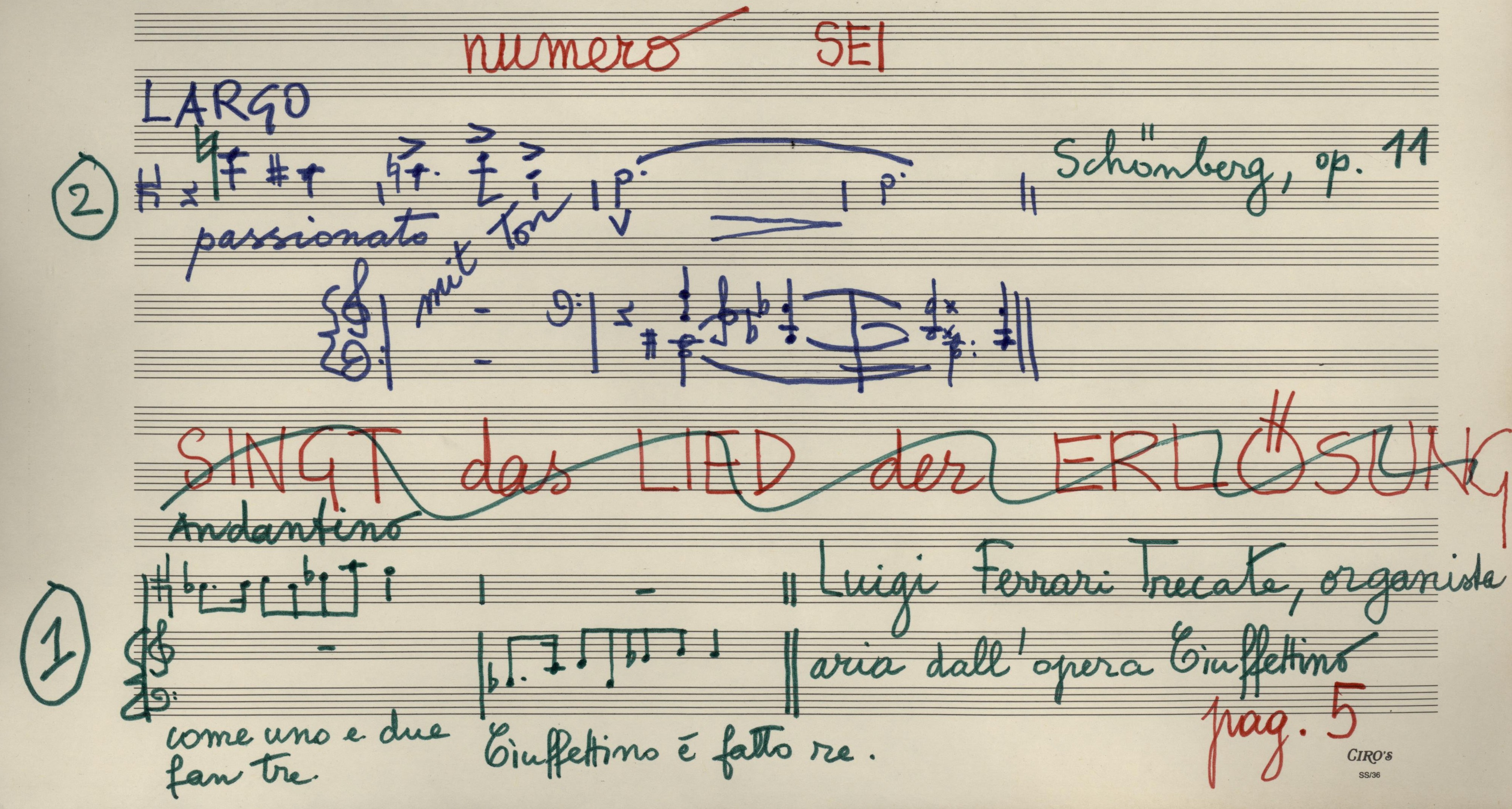
Downloads
Published
2026-07-29
Issue
Section
Articles
License
Copyright (c) 2026 Archival Notes

This work is licensed under a Creative Commons Attribution-NonCommercial-NoDerivatives 4.0 International License.